
Dressmaker guide · Build 410
How fabric tags and swatches work
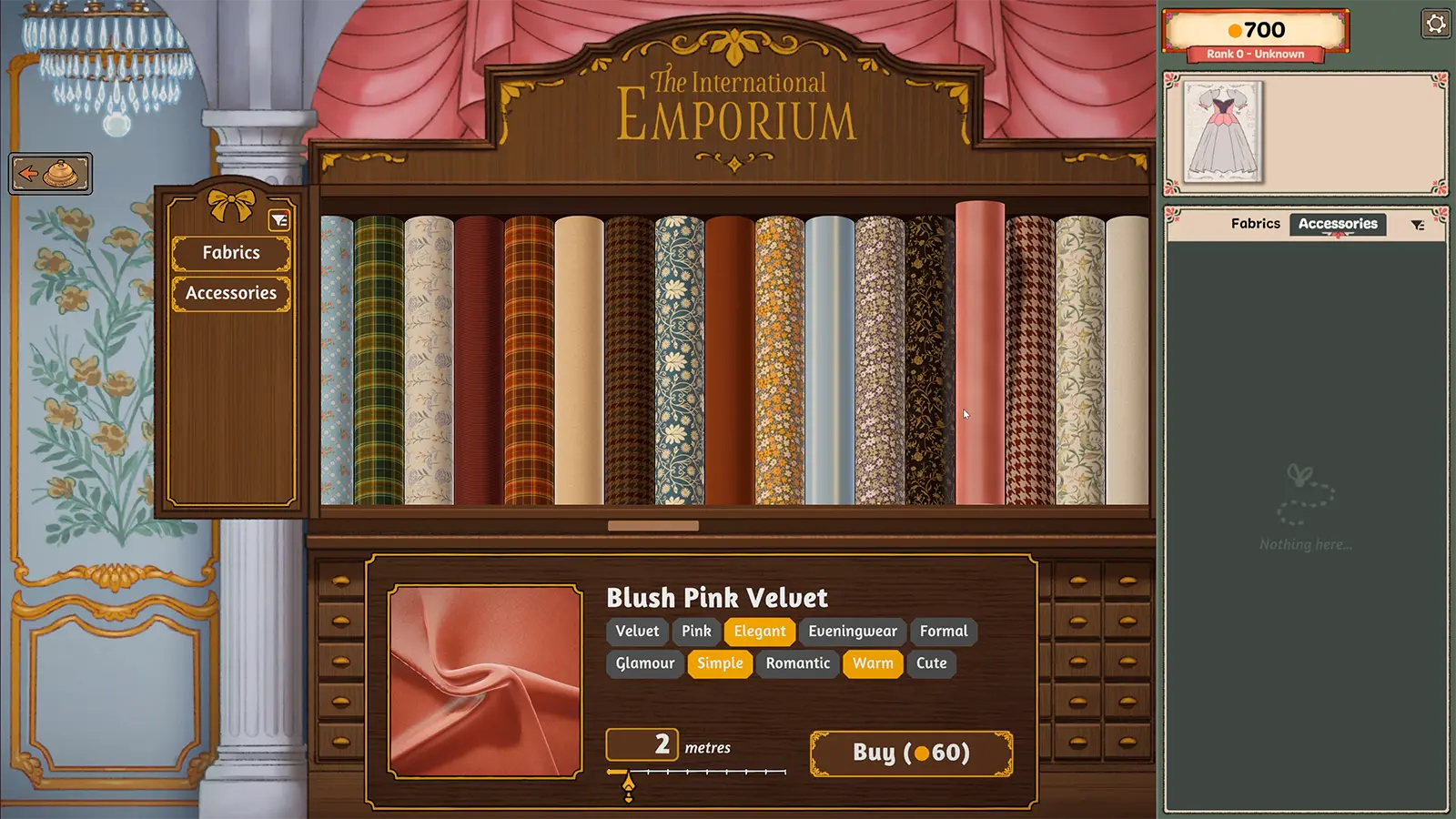
Use the shop tags for an initial shortlist, compare the fabric family and pattern, preview the swatch in the sketchbook, and buy the listed length only after the full dress design is stable.
01 / Prerequisites
Check these before you start
- OKHave a commission brief or an off-the-rack design goal.
- OKKnow the current fabric-length estimate in the sketchbook.
- OKCheck the budget before premium materials enter the plan.
02 / Steps
Follow the workflow in order
- 01
Shortlist by tags
Read the material, mood, formality, and style labels. Use them to find fabrics that can support the target rather than guessing from color.
- 02
Filter by the requirement type
A tag requirement is not the same as a fabric-type rule. A commission can ask for a minimum score such as Silk, a share such as Velvet: 50%, or a hard restriction such as Use only: Cotton.
- 03
Compare the fabric family
The store names cotton, linen, wool, silk, and velvet among the major materials. Community-visible examples show that individual rolls can also carry color and pattern tags such as Pink, Patterned, Flowers, or Brocade.
- 04
Compare visual finish
Silk, velvet, and patterned fabrics can read differently on the mannequin. Preview the swatch so the visual direction is intentional.
- 05
Check the length
A low unit price can become expensive if the pattern requires more cloth than expected.
- 06
Commit after the design settles
Buy final yardage after pattern pieces stop changing. This reduces leftover rolls and wasted gold, especially when a large skirt or sleeve change alters the estimate.
- 07
Recheck color-rule pieces separately
Use only and Avoid lines inspect every cut piece. One small panel in a forbidden color can fail the entire commission even if most of the garment uses approved fabric.
03 / Common mistakes
Avoid wasted time and materials
Using one fabric roll for every commission because it has a strong all-round tag.
Confusing a fabric-type share with a style-tag score.
Buying exact length before a large skirt or sleeve change.
Ignoring that visual pattern and scoring tags are separate decisions.
04 / Continue
Open the connected systems
Fabric Shop
Fabrics carry visible style tags, prices, and visual finishes. The shop is a scoring and budget decision, not just a color palette.
Open player answer ->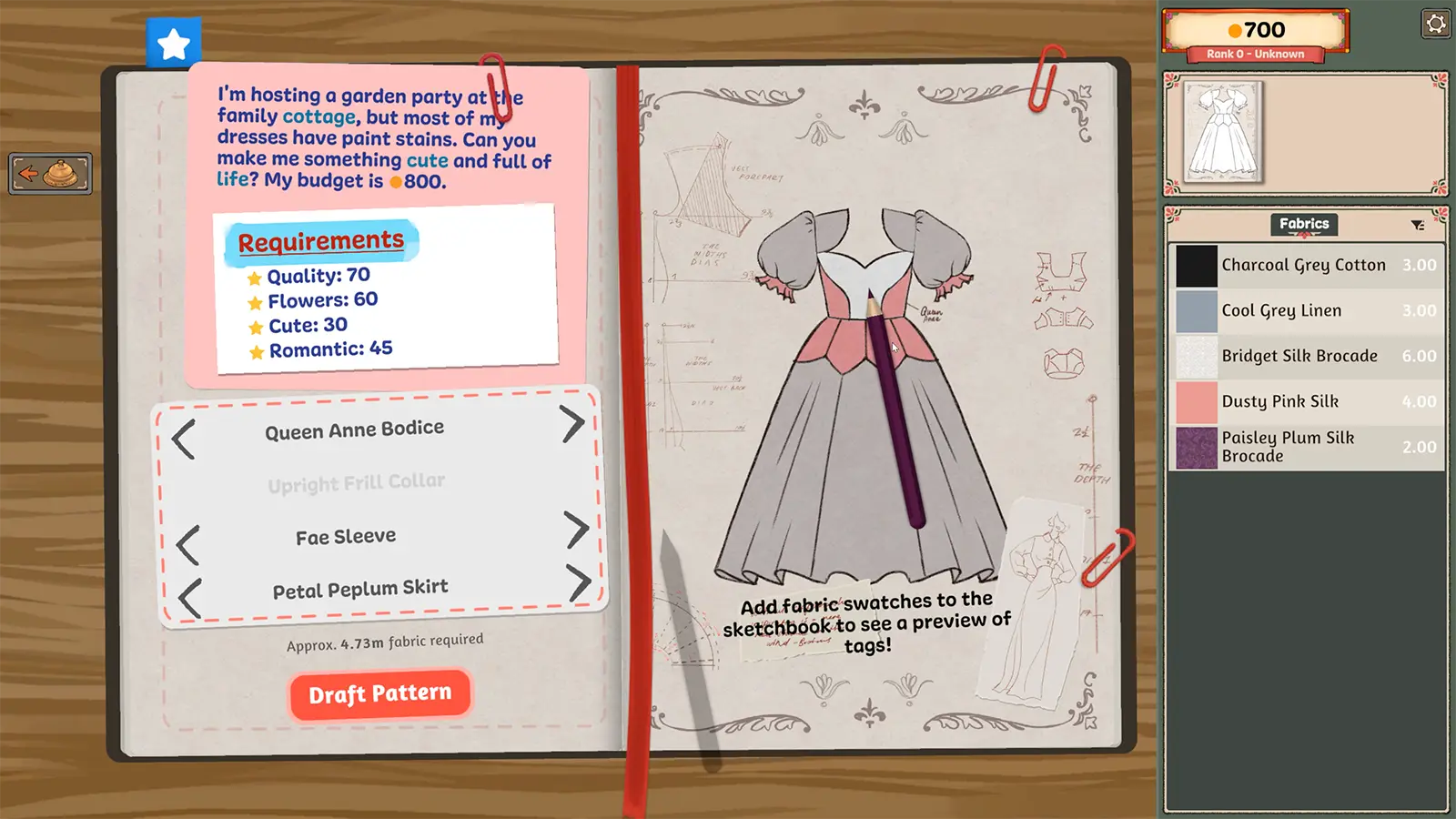
Sketchbook
The sketchbook is the commission planning screen: choose garment pieces, preview material tags, compare the design against the request, and draft the pattern.
Open player answer ->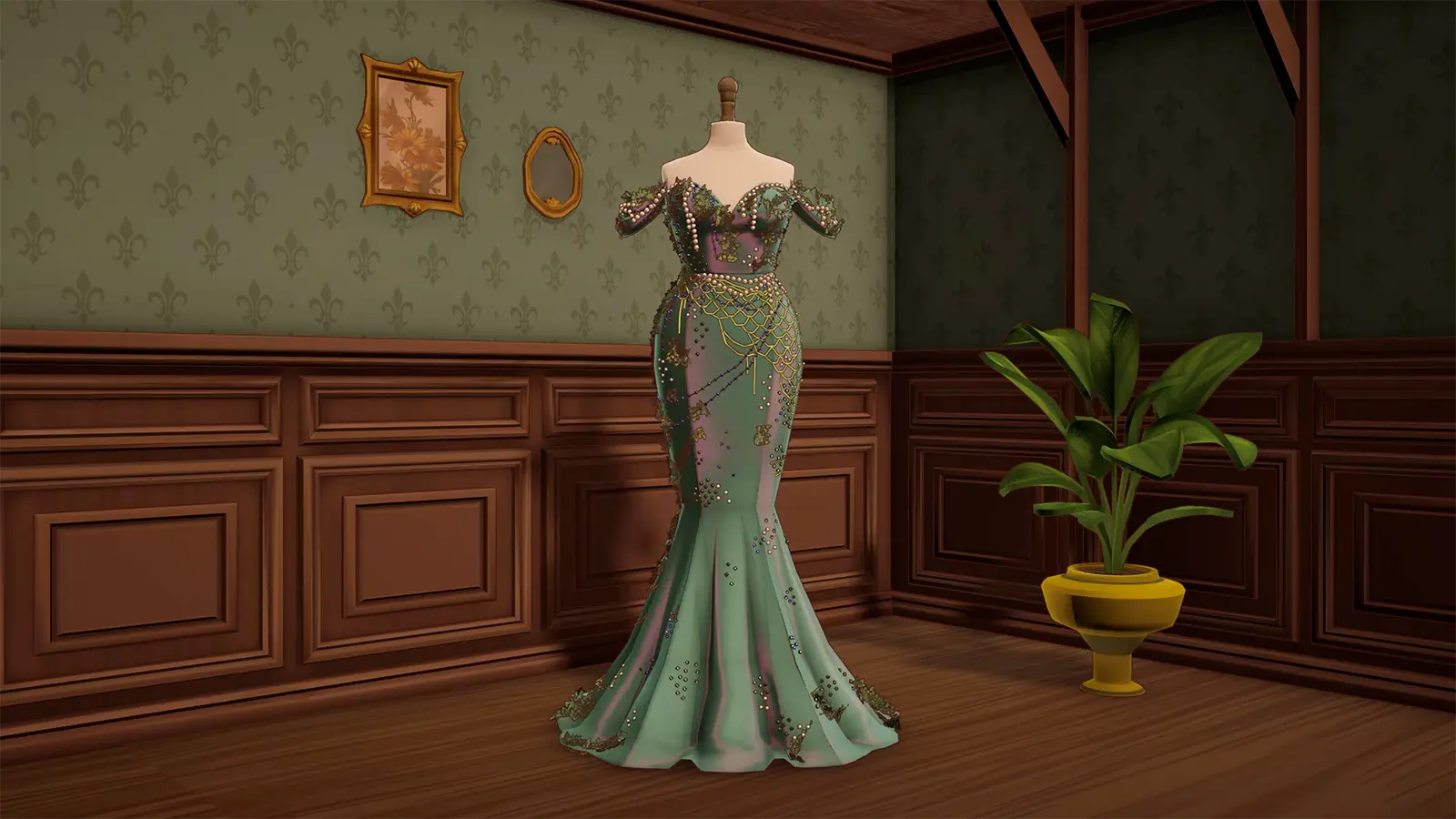
Silhouette Choices
Silhouette determines how much fabric and decoration the design can carry. A ballgown offers space for large motifs; a fitted gown demands cleaner placement.
Open player answer ->