
Dressmaker guide · Build 410
How to place trims and accessories cleanly
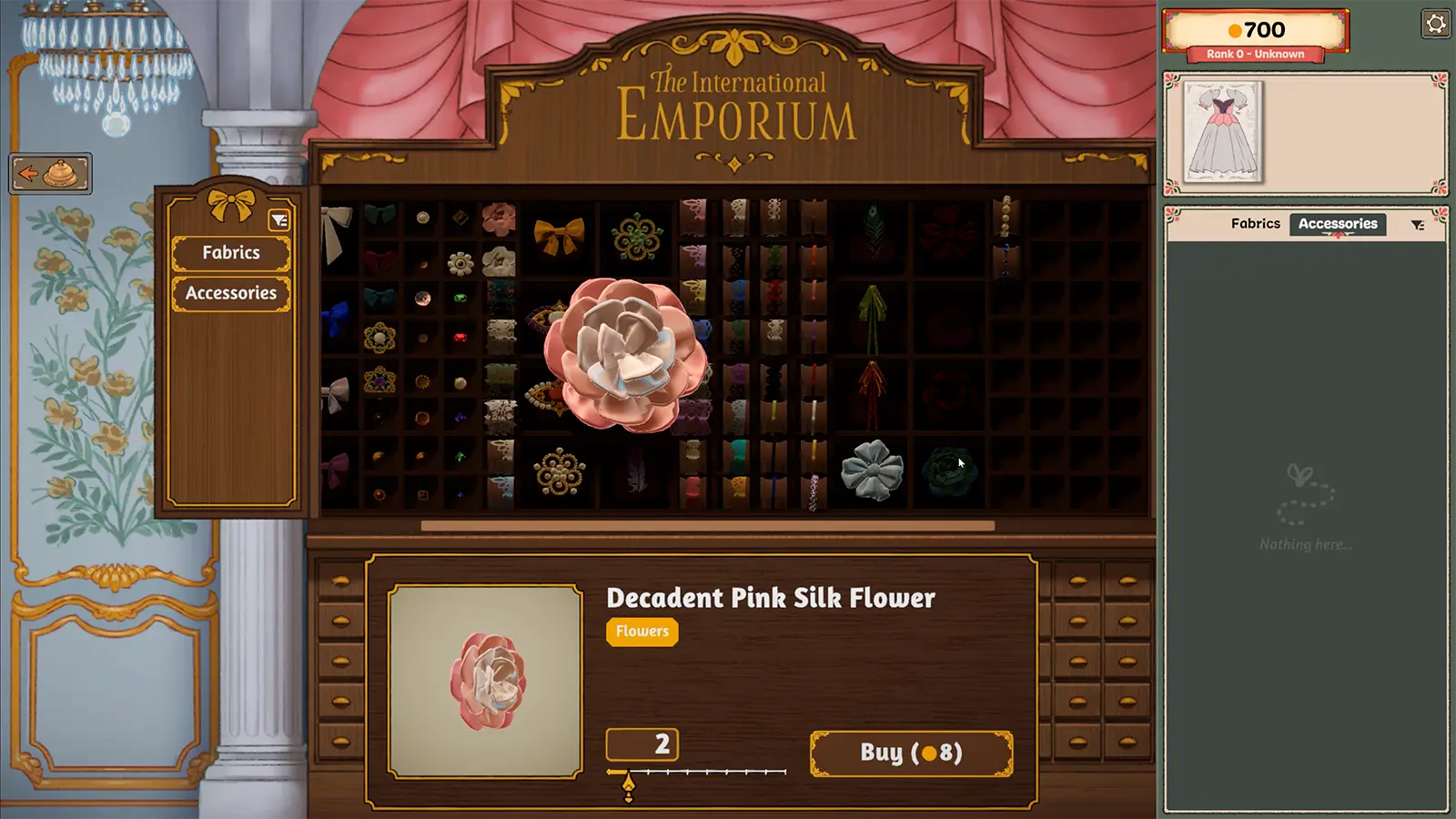
Place required pieces first, use repeated placement shortcuts for deliberate patterns, check measured trim lengths, and zoom around cuffs and seams before trusting a decoration.
01 / Prerequisites
Check these before you start
- OKFinish enough of the garment to see the target area.
- OKBuy the required decorations.
- OKKnow which tag gaps remain after fabric and pattern selection.
02 / Steps
Follow the workflow in order
- 01
Place required pieces first
Solve the commission before decorating freely. This prevents a beautiful optional arrangement from hiding a missed target.
- 02
Check the exact accessory type
A Brooch requirement counts actual brooches, while a Trim requirement counts trim length. Visually similar items are not interchangeable if their tooltip category differs.
- 03
Keep the scale readable
A single large accessory can anchor the design. Repeated small pieces should form a rhythm rather than visual noise.
- 04
Use Shift for repetition
Community guides report that holding Shift keeps the same accessory active for repeated placement.
- 05
Pin long trim before finishing
Community trim guidance recommends placing pins along curves and working in sections. The trim follows the pinned path, so extra pins prevent folds, clips, and sudden direction changes.
- 06
Check trim direction and tilt
If a trim appears upside down, draw it in the opposite direction. If it sits too far off the garment, use the adjustment controls before adding more trim.
- 07
Inspect seams, cuffs, and corners
Zoom and rotate around difficult areas. A trim that looks correct from the front can clip badly from the side.
- 08
Review both front and back
Check that the final design still reads as intentional from the main completion view.
03 / Common mistakes
Avoid wasted time and materials
Decorating first and checking requirements last.
Using a decoratively similar item that does not match the requested accessory category.
Placing tiny requirement pieces where they are visually lost or clipped.
Assuming a community hiding trick is an official scoring rule.
04 / Continue
Open the connected systems
Accessory Placement
Accessories can add required tags, event-appropriate detail, or personal style. Placement, scale, and layer order determine whether they help the design or hide it.
Open player answer ->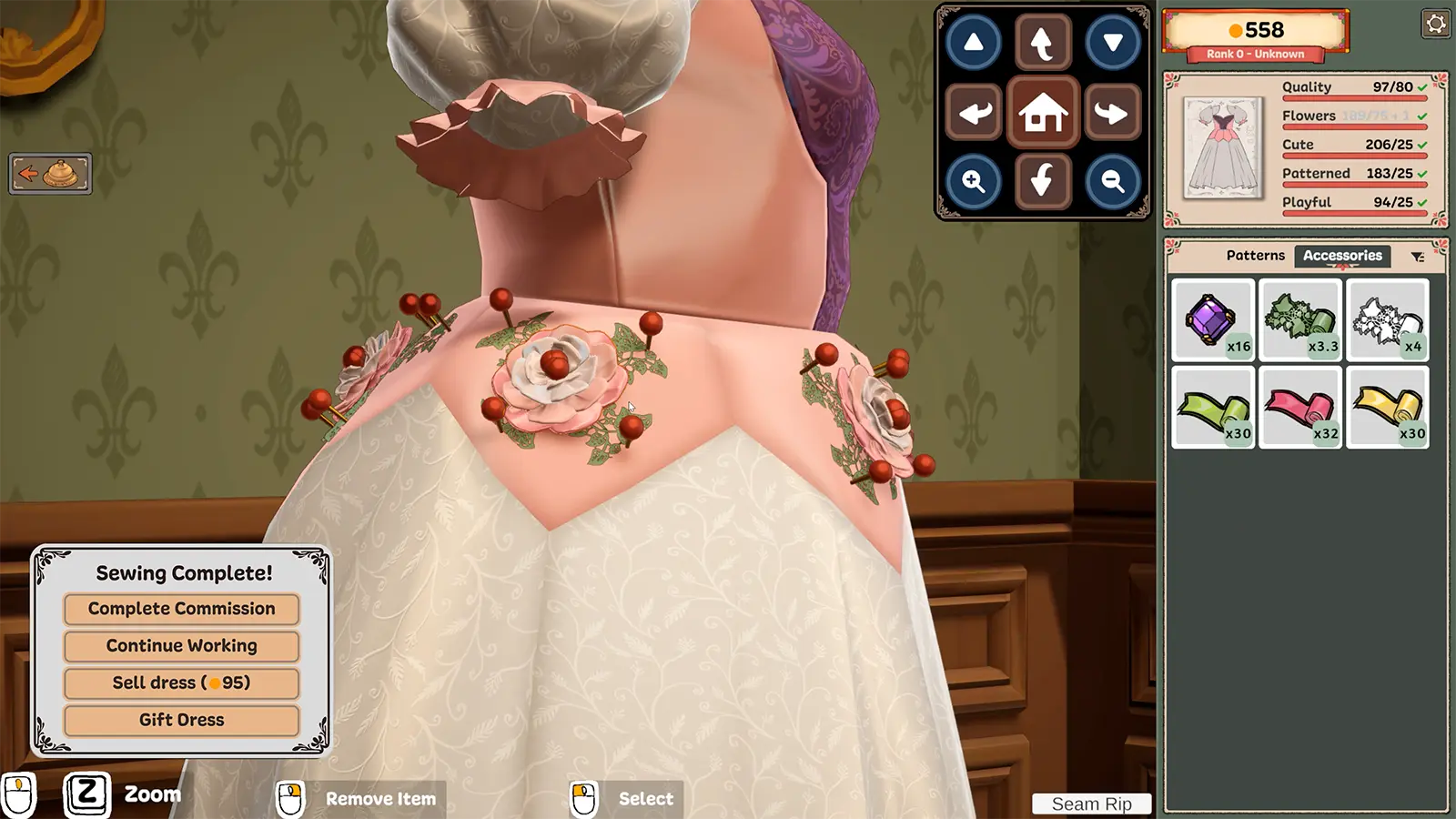
Quality Score
Quality is a scored requirement shown beside the style tags. Style tags prove the requested aesthetic; quality tracks how cleanly the garment was built.
Open player answer ->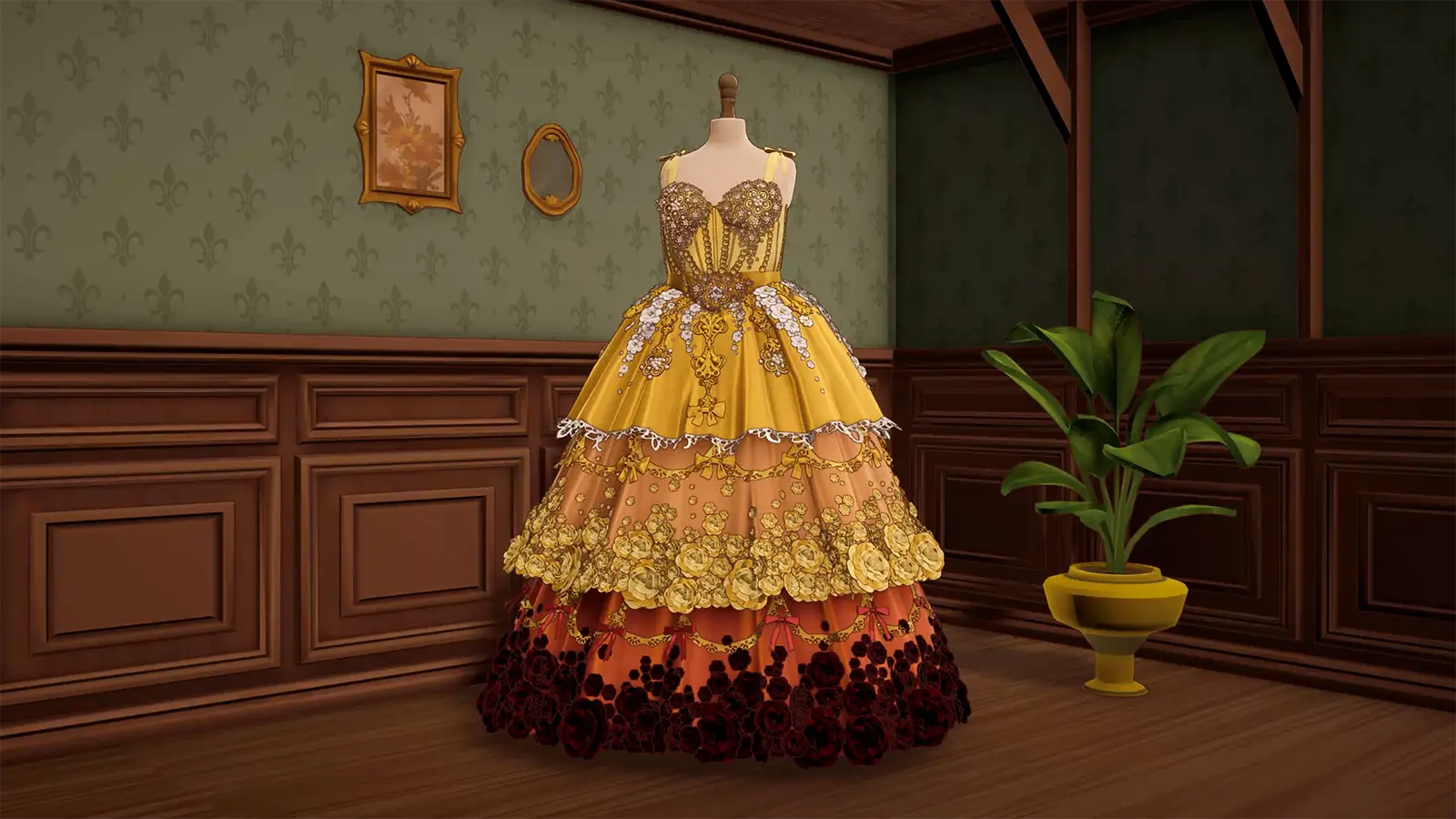
Advanced Event Dresses
High-detail event dresses demand more material, decoration, and planning. The goal is not maximum ornament everywhere, but deliberate coverage of every request.
Open player answer ->