
Dressmaker guide · Build 410
Dressmaker commission guide: every requirement type explained
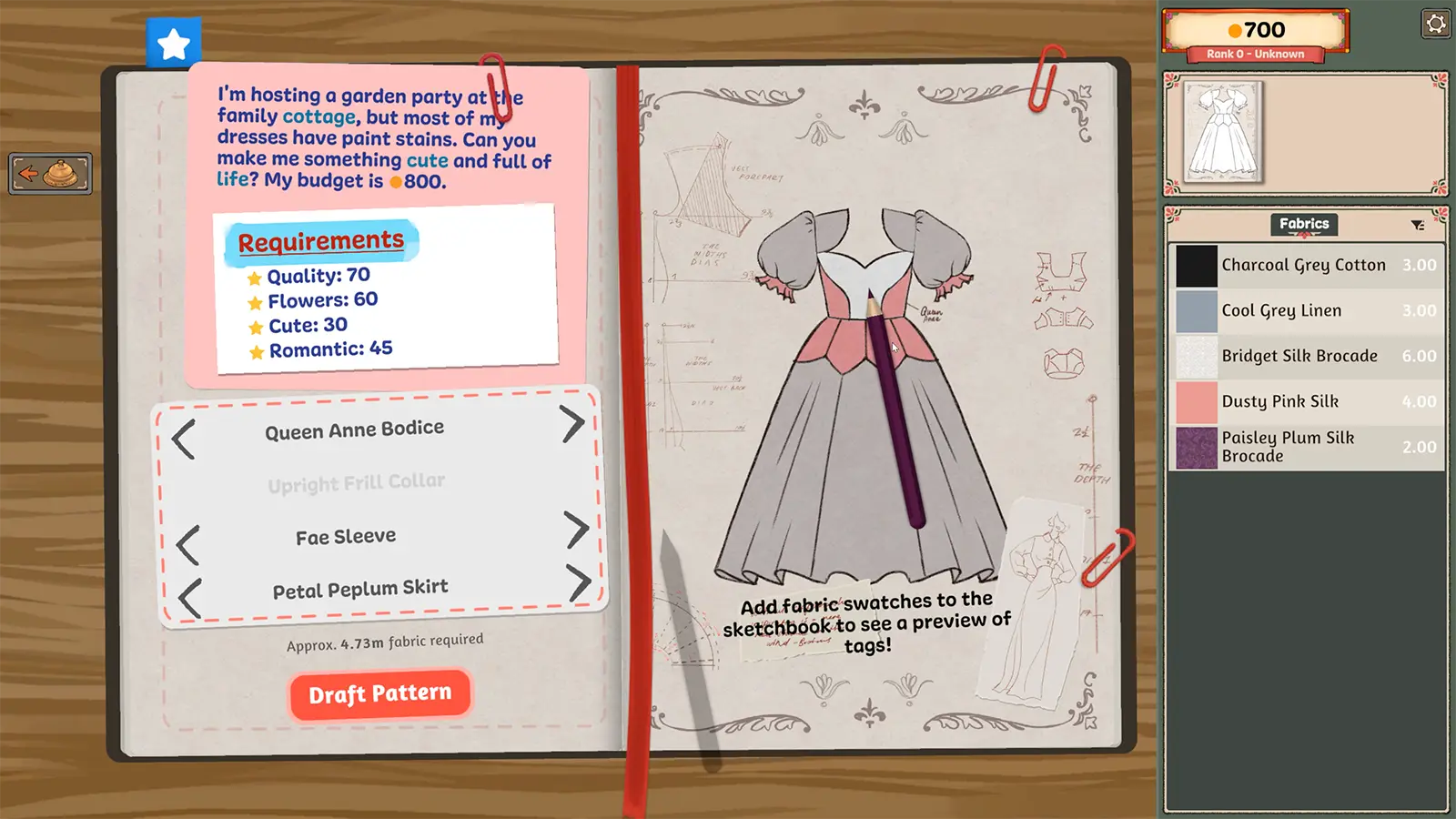
A commission succeeds only when every applicable requirement passes. Identify the line type first, then solve the hard limits before decorating or buying premium material.
01 / Prerequisites
Check these before you start
- OKAccept a commission and open its sketchbook page.
- OKRead the complete requirement list before shopping.
- OKKnow whether your current design estimate is below, at, or above each target.
02 / Steps
Follow the workflow in order
- 01
Separate minimums from maximums
A normal tag target means the dress must reach at least that score. A line marked Max or at most means the finished dress must stay below the limit, so adding a strong matching accessory can actually fail the commission.
- 02
Treat quality as its own target
Quality is separate from style tags. Community testing reports that commission quality combines cutting grain, mannequin fit, and sewing accuracy, while off-the-rack and achievement quality use a different split.
- 03
Read area-based color and fabric lines carefully
A line such as “Velvet: at least 50%” checks the area of the cut pieces, not the number of metres purchased. A two-color fabric can contribute part of its area to both listed colors.
- 04
Follow Use only and Avoid exactly
Allowed-color and allowed-fabric lines inspect every cut piece. One unapproved fabric in a small panel can break the whole requirement, even if most of the dress uses the right material.
- 05
Count the exact accessory type
A Brooch requirement counts brooches, not generic decorations. Beaded trim can contribute multiple counts when the individual beads belong to the requested type, so check the accessory tooltip and finished score.
- 06
Measure trim requirements
Lace Trim and Trim are separate measured categories. Pinning a long trim in sections adds to the final length; other accessory families and leftover fabric do not count toward that line.
- 07
Check different colors and fabrics last
These lines count distinct values used by the cut pieces. They are easy to miss when several panels share the same material or when one multi-color fabric is expected to cover several counts.
03 / Common mistakes
Avoid wasted time and materials
Treating a Max line as a recommended target instead of a hard upper limit.
Confusing fabric purchase length with the area of the cut pieces.
Assuming accessories count toward fabric-color or fabric-share lines.
Using a visually similar accessory that has a different item type.
Completing the dress before checking every line on the finished score panel.
04 / Continue
Open the connected systems
Commission Requirements
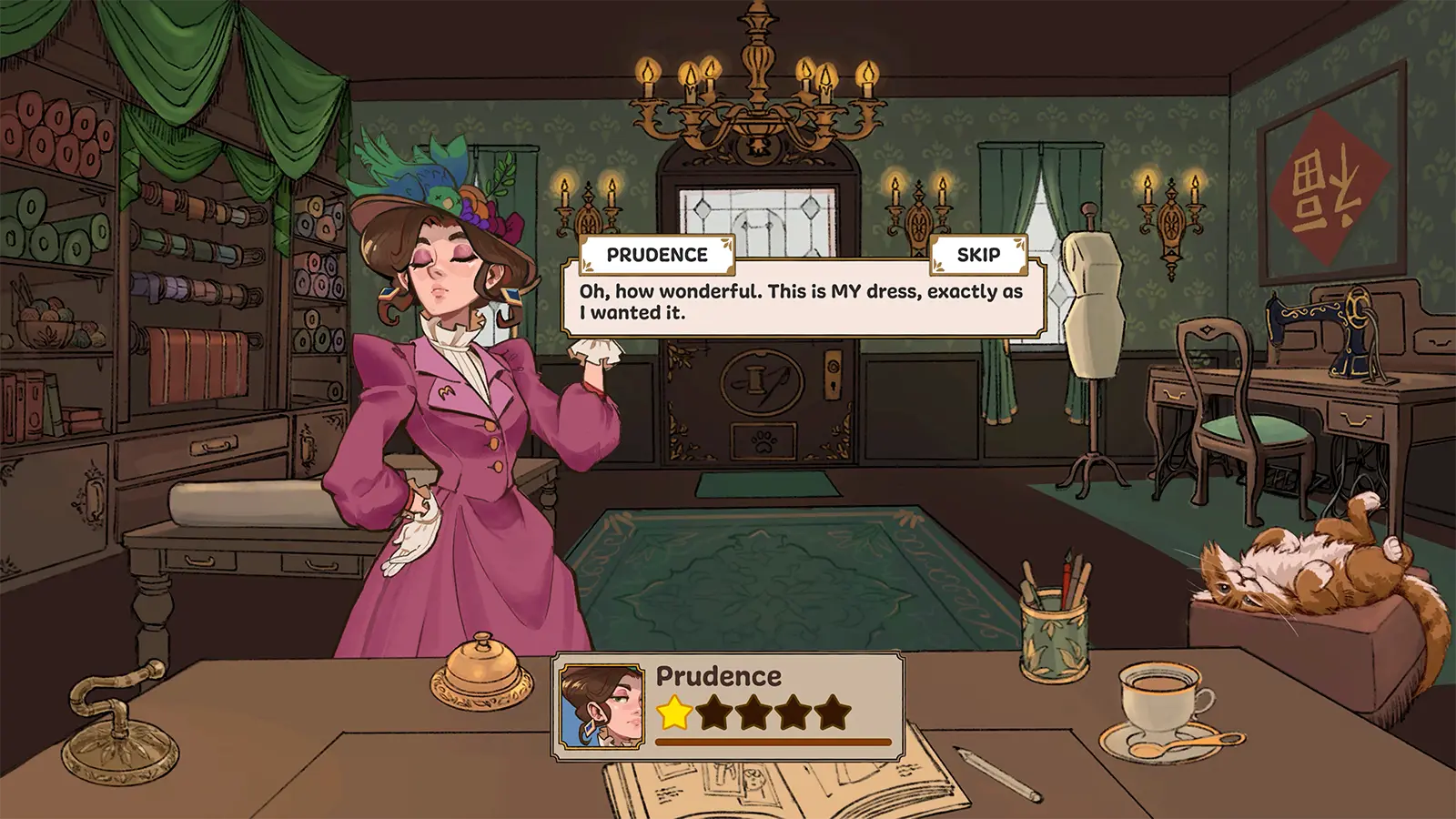
Every commission combines a brief, budget, and visible tag targets. Treat those targets as the final checklist rather than choosing materials by color alone.
Open player answer ->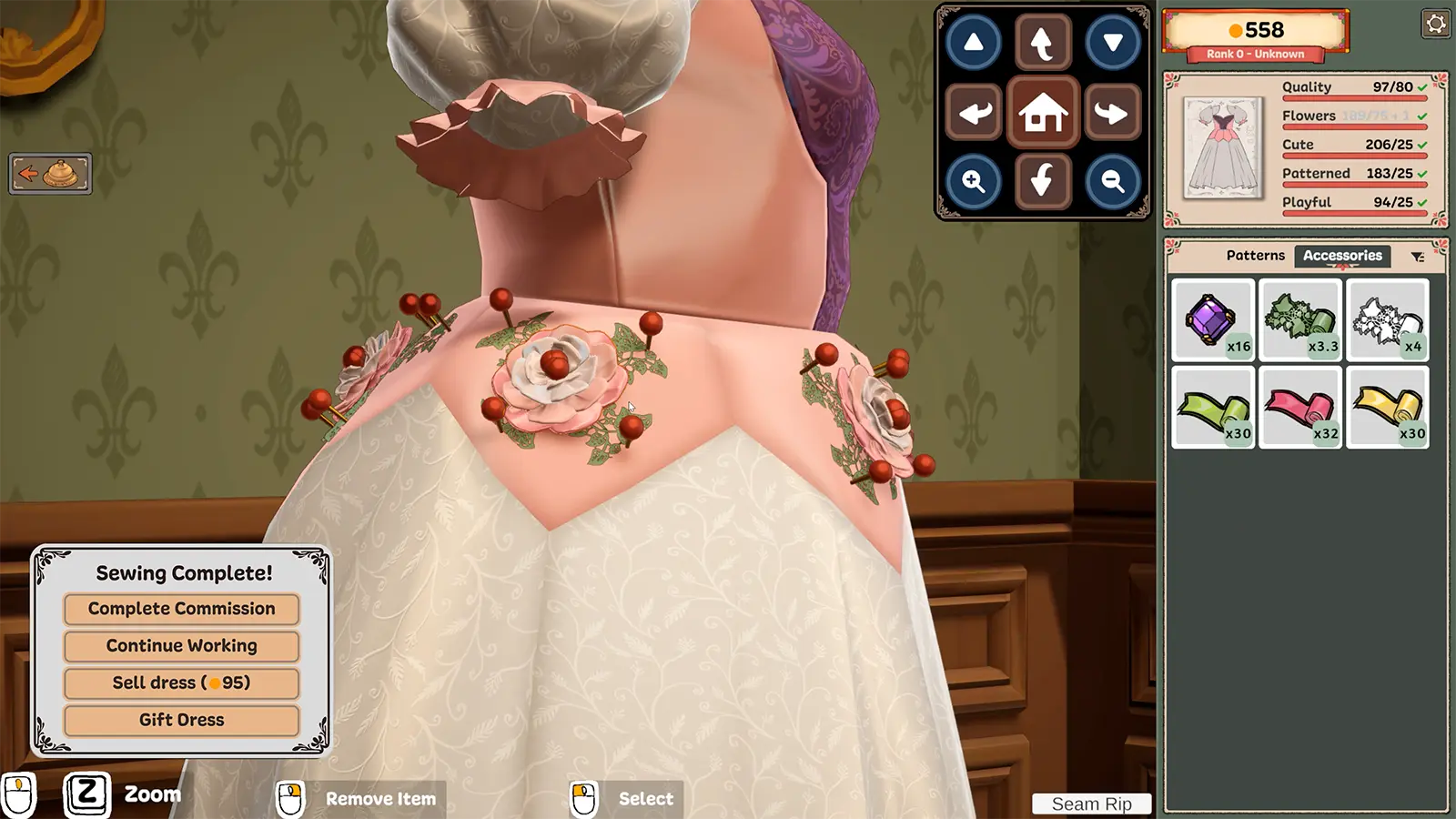
Quality Score
Quality is a scored requirement shown beside the style tags. Style tags prove the requested aesthetic; quality tracks how cleanly the garment was built.
Open player answer ->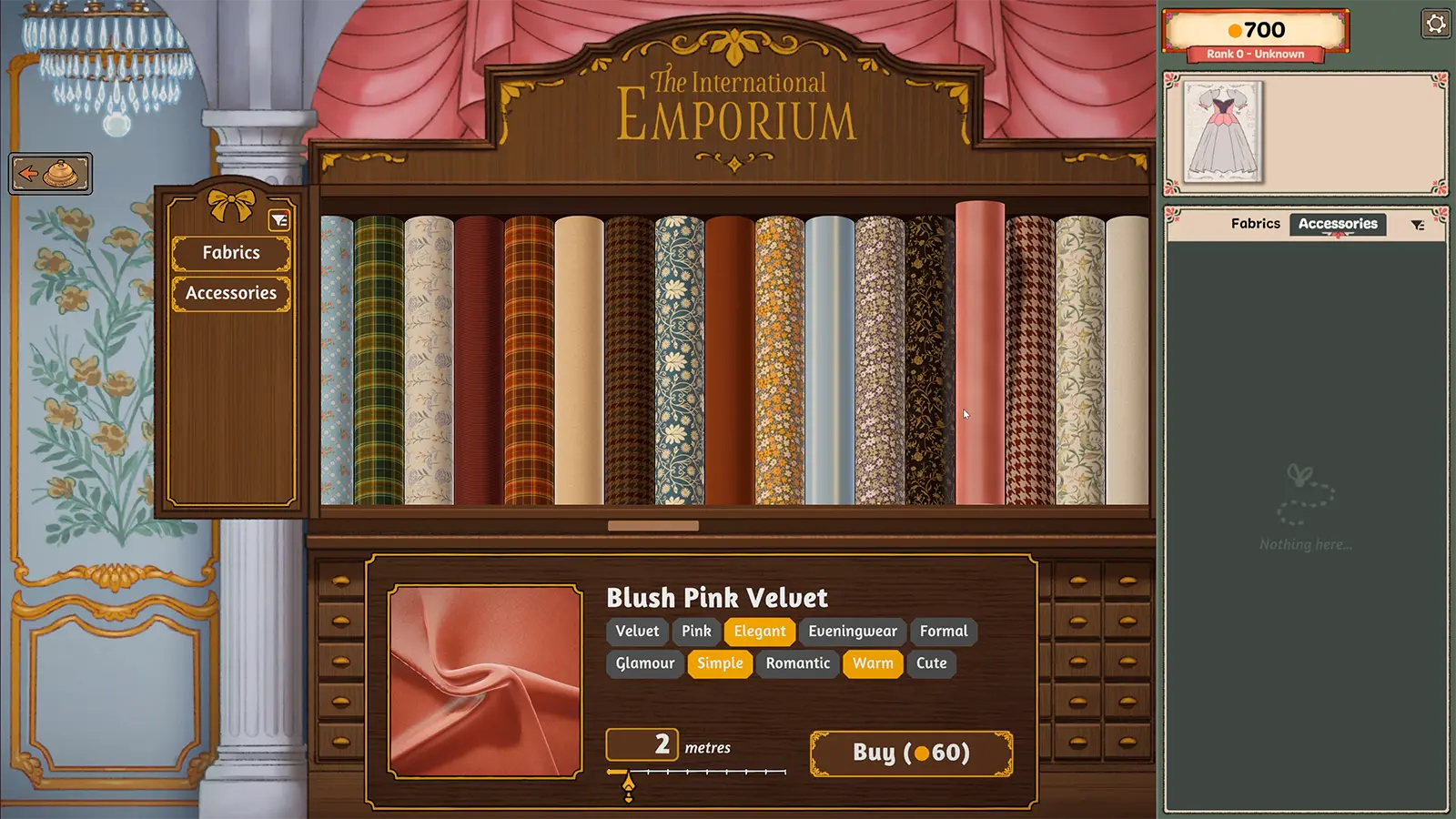
Fabric Shop
Fabrics carry visible style tags, prices, and visual finishes. The shop is a scoring and budget decision, not just a color palette.
Open player answer ->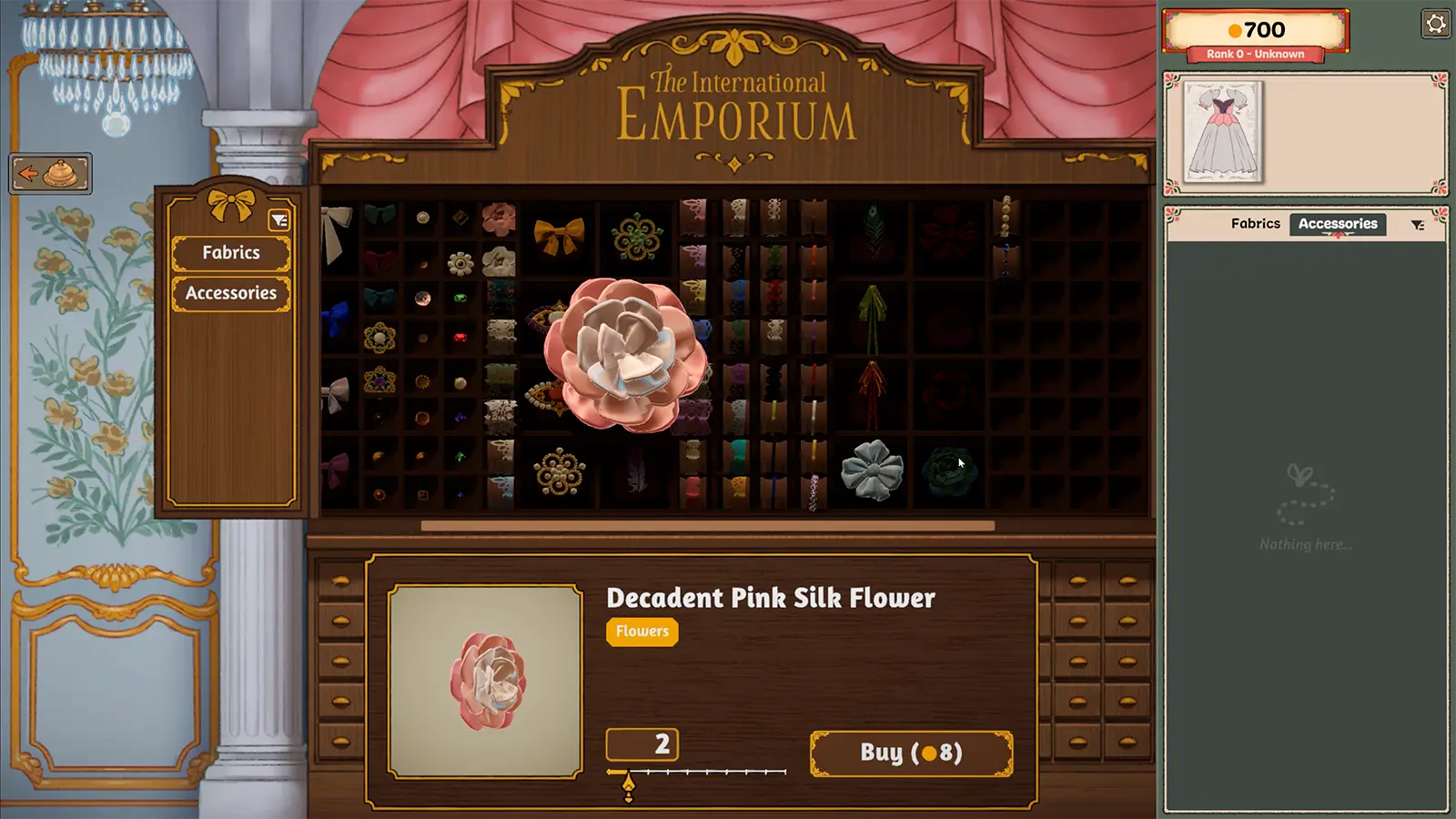
Accessory Placement
Accessories can add required tags, event-appropriate detail, or personal style. Placement, scale, and layer order determine whether they help the design or hide it.
Open player answer ->